
What an ad for a "Maine Coon without papers" really means, why the word "phenotype" has become a polite way of saying crossbreed, and whether such a kitten is worth taking home.
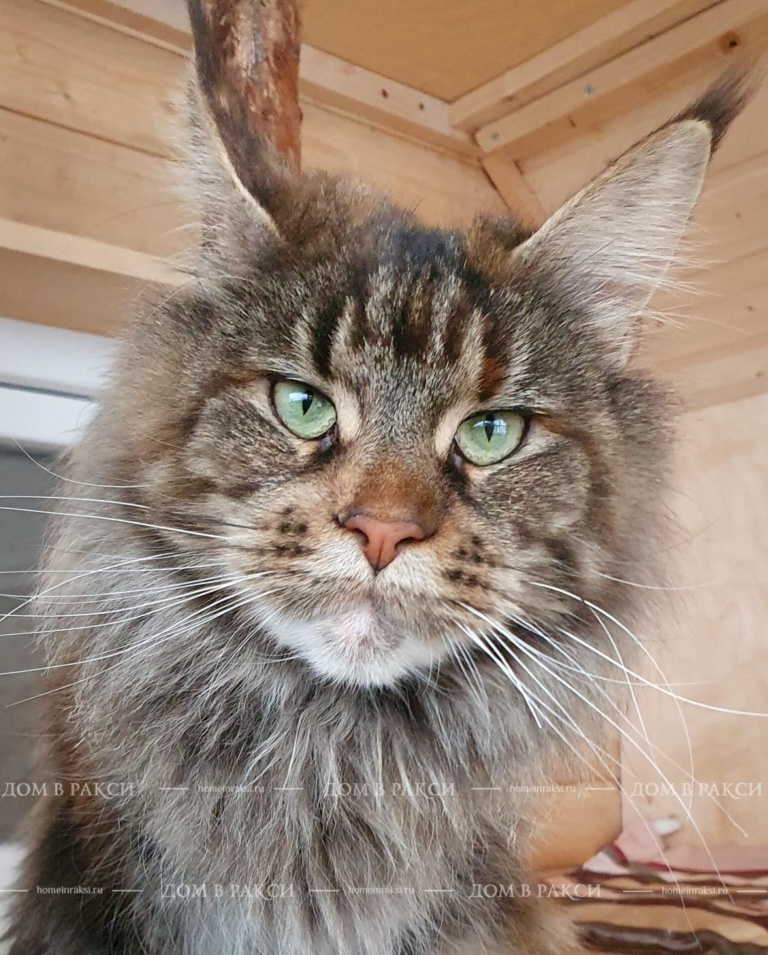
"Maine Coon, no papers, who needs them for a pet": the most common wording in ads. And the most honest, because a kitten like that really has no breed.
That doesn't make the kitten any worse. The trouble starts when a crossbreed is passed off as a pedigree and priced almost like a cattery kitten.
A crossbreed is the offspring of cats of different breeds, or of a pedigree cat and a non-pedigree one. With Maine Coons it's usually kittens from a pedigree male and a street or yard cat, or the offspring of two Coon-like cats of unknown origin.
Breed is defined not by looks or size but by proven ancestry. If the ancestors can't be traced through documents, the cat counts as non-pedigree, whatever it looks like.
More and more ads say "Maine Coon phenotype" instead of "crossbreed". It sounds scientific, and that's the whole idea.
Phenotype is the sum of an animal's visible traits, and genotype is what's written in its genes. So "a cat of Maine Coon phenotype" means exactly one thing: it looks like a Maine Coon and its origin is unknown.
Sometimes the word is used correctly. In breeding there are "cats without a pedigree that match the type": they are registered with a club after an expert assessment and brought into breeding under a special procedure. That's how many breeds were once formed. But there are documents and club records behind it, and a line in an ad can't replace them.
If a seller says "phenotype", ask whether the cat has any club document at all. If there's no document, you're looking at a crossbreed, and "phenotype" is just there to dress up the ad.
A crossbreed's looks depend on what he has inherited from each parent, and they can't be predicted. What usually stands out is a type that doesn't hang together: some breed features are there, but they don't add up.
Most often a crossbreed is given away by a profile with a sharp stop, which is easy to see in a side-on photo. The muzzle is round or short, without a pronounced square chin.
A crossbreed's tail is shorter than it should be and unevenly furred, bushier towards the tip. A Coon's tail is long and evenly furred, and reaches the shoulder blades when laid along the back.
The coat is evenly long all over, without the Coon's typical contrast between shorter fur on the shoulders and longer fur on the flanks and "breeches". The ears are set low or wide apart, with a narrow base. The body is closer to square and the bone is lighter.
That said, a crossbreed can be big, fluffy and tufted, so you can't tell the breed from size and ear tufts.
The difference is in what you can know about a kitten in advance. With a crossbreed you can't even guess the size: a kitten from a Coon and a yard cat may grow to five kilograms or to eight. The seller usually promises eight.
The same goes for character. A breed sets a range: sociability, chattiness, attachment to people, late maturity. A crossbreed's range is wider and includes the temperament of the other parent, about whom usually nothing is known.
Health matters most, and that's exactly what you can't check. Maine Coons have hereditary diseases that breeders track with tests: hypertrophic cardiomyopathy, pyruvate kinase deficiency, spinal muscular atrophy and joint dysplasia. A pedigree kitten comes with his parents' documents confirming these tests. A crossbreed has neither tests nor information about his ancestors, and a mutation from the Coon parent doesn't just go away.
And there's no breeder behind a crossbreed. A seller disappears after the sale, while a breeder stays in touch for years and knows the bloodline, the litter and the illnesses the relatives have had. When something is wrong with the cat, the breeder is the first person to write to, and only after that conversation does it make sense to go to the vet, with the cat's history in hand.
A crossbreed can't cost as much as a pedigree kitten, because none of what you pay a cattery for has gone into him: testing of the breeding cats, matings with proven animals, litter registration, show assessments of the parents, support after the sale.
This is how people most often lose money: a crossbreed is sold for a little less than a cattery kitten, with the explanation that at least you're "not overpaying for paperwork" and a promise that the cat will grow huge. In the end the buyer pays almost a pedigree price for a lottery ticket.
If a crossbreed is sold cheaply or given away to a good home, there's nothing wrong with the deal.
To be frank: often.
If you want a pet rather than a show or breeding cat, if you accept that his size and character could turn out any way at all, and if the price is fair, a crossbreed will be just as much a member of the family as a pedigree cat. He'll greet you at the door and curl up next to you just the same.
And shelters and foster homes are full of Coon-like cats who need a home. That's a worthy option, and a more honest one than paying good money for a "phenotype".
There's only one mistake: paying a pedigree price and expecting a pedigree cat. Without papers it's a crossbreed, whatever you call it.
A pedigree means someone is answerable for the cat's health and type several generations back, and you can check it. The rest is up to you, and a cat's origins don't stop you loving him.
We've covered the features that mark out a pedigree cat separately, and you can see them for real on our Females and Males pages, along with their pedigrees and test results. Our kittens with papers are on the Kittens page.
Home in Raksi Maine Coon cattery, St Petersburg. We post our news in our VK group (in Russian).