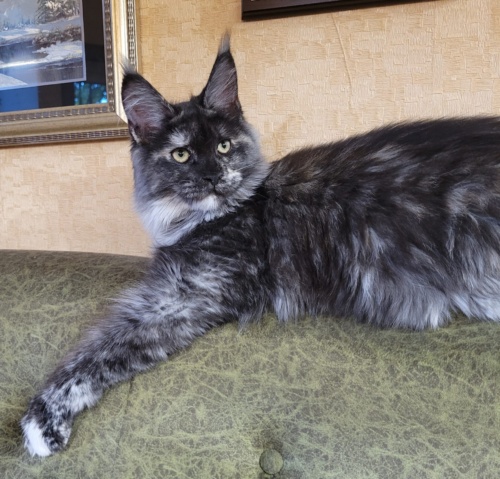
How to read the ingredients on cat food, how many times a day to feed a kitten and an adult cat, why the water bowl goes somewhere separate and what happens to weight after neutering.
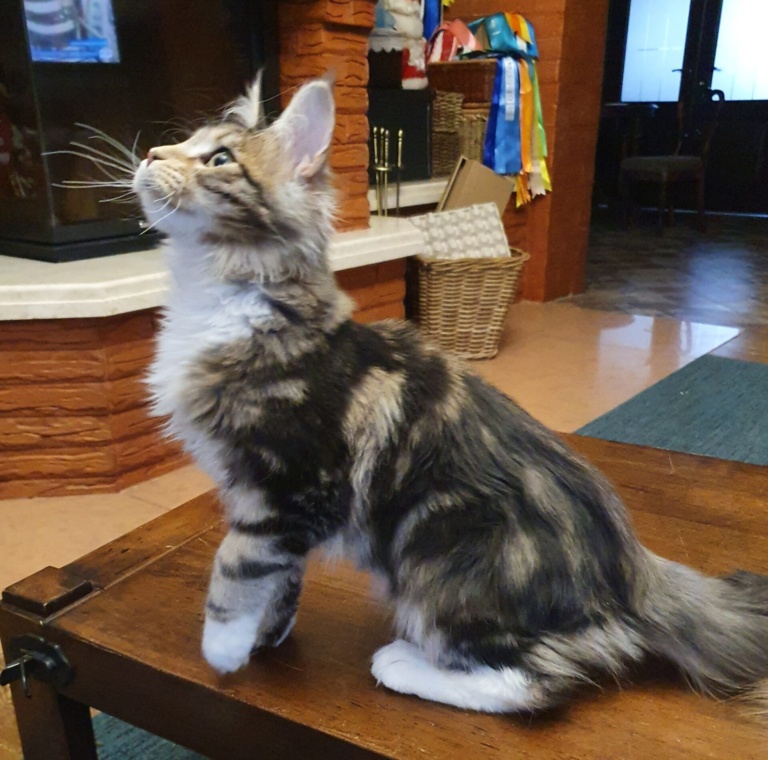
A big cat with a long coat needs plenty of protein. That's the only sentence in this article everyone agrees on. After it the arguments start, and it's easy to drown in them. So here is only what works whatever you choose: how to pick a food, how often to feed and where owners most often go wrong.
The word "premium" on the packet means nothing: nobody regulates it. Look at the ingredients.
Meat should come first and be named specifically, "chicken" or "turkey", not "meat and animal derivatives". The second thing to look at is the protein content: for a Maine Coon, thirty-two per cent or more is sensible. The third is what comes after the meat. If it's corn and wheat straight away, the food is bulked out with cheap carbohydrates.
Never switch foods abruptly. Mix the new food into the old over a week to ten days, increasing its share gradually, or you'll get an upset stomach for no good reason.
A natural diet works too, but it isn't "food from the table". It's a calculated ration of meat, offal and supplements. You'll have to do the maths properly, or it'll turn out worse than an average dry food.
Maine Coons eat little and often, so dry food is usually left out for them all the time. A kitten under six months gets four or five meals a day, by a year that drops to two or three, and an adult is fine on two.
Measure the portion by the cat's weight, not by eye. The daily amount is on the packet, and it's calculated for an adult in normal condition: if your cat has already put on extra weight, work from his target weight.
Maine Coons love water, play with it and climb up to drink from the tap. And almost all of them refuse to drink from a bowl placed right next to their food.
Put the water somewhere separate, at least a metre from the food, or better still buy a drinking fountain: cats trust running water more. Change it twice a day. The more your cat drinks, the less you need to worry about his kidneys and urinary tract, and in neutered males that's a weak spot.
The metabolism slows down, but the appetite stays the same. Within six months a placid cat turns into a heavy one, and the owner usually notices only when the change is already plain to see.
Cut the portion straight after the operation, not when it starts to show. There are lower-calorie foods for neutered cats, and switching to one makes the job easier. If you're not sure exactly how much to give, message the breeder you got the kitten from: they've seen how his littermates put on weight and can advise based on the line. With that in mind, you can go to the vet for an exact calculation.
Unlike genetics and age, your cat's diet is entirely in your hands. A feeding mistake shows up in the coat and weight after six months, and it can be put right over the next six. The essentials: meat first in the ingredients, protein from thirty-two per cent, portions by weight, and only ever change food gradually.
We explain what we feed our own cats and what goes with the kitten to its new home when we hand the kitten over, and afterwards whenever you get in touch. Our kittens are on the Kittens page, and guides and news are in our VK group (in Russian).
Home in Raksi Maine Coon cattery, St Petersburg.