
Why coat length has nothing to do with it, what the Fel d 1 protein is, how males and females differ in the amount of allergen they produce, and how to test yourself honestly before buying a kitten.
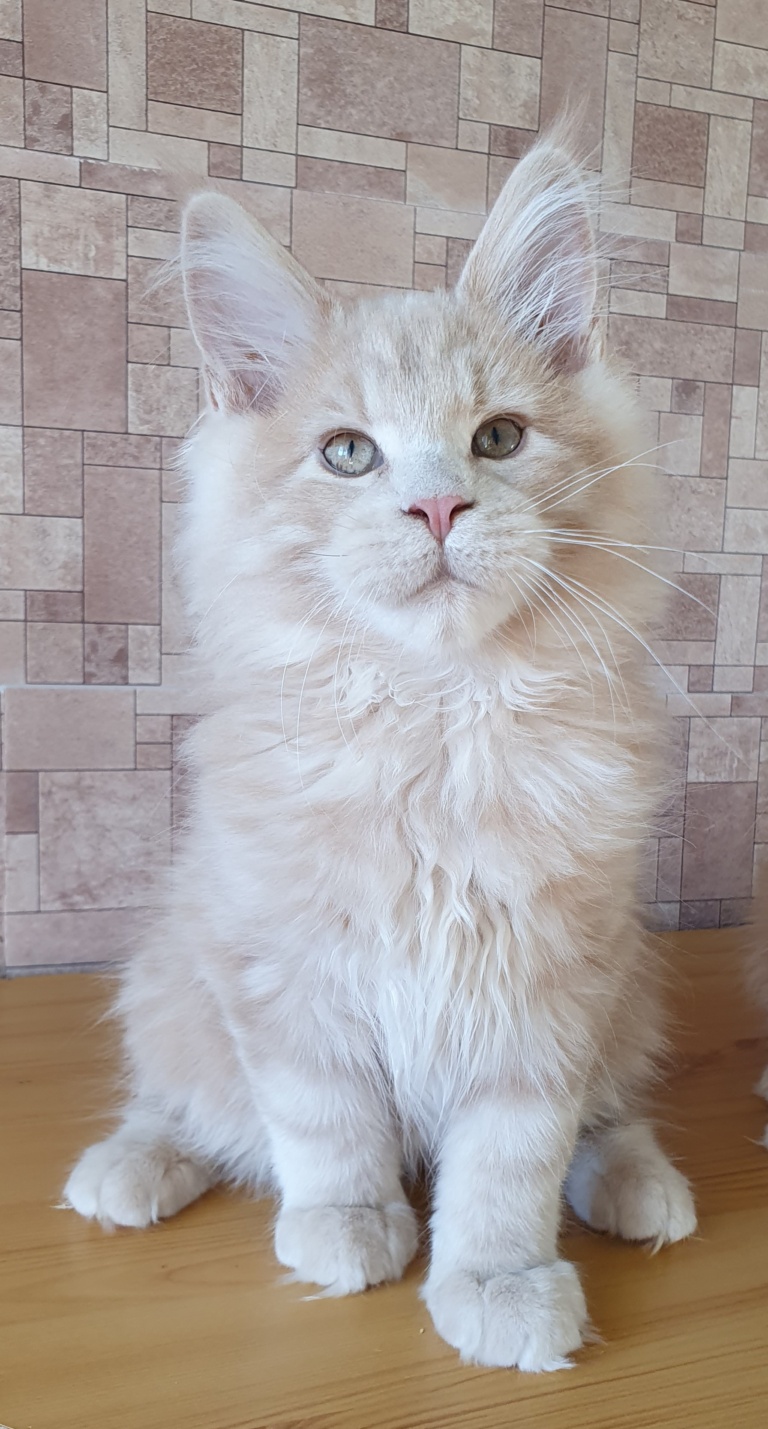
"My husband has an allergy, but the Maine Coon is hypoallergenic, isn't it?" We hear this question regularly, and we have to answer "no".
What you can do is check your reaction in advance, and fairly accurately. But you have to test it on real, live cats: lab tests alone aren't enough.
Almost every other misconception starts with this one. The reaction is caused by a protein. The main cat allergen is called Fel d 1, and it's produced by the sebaceous glands in the skin and by the salivary glands. The cat grooms itself, the saliva dries on the fur, and particles of skin and dried saliva spread all over the home.
The fur only carries the allergen. That's why coat length on its own changes almost nothing, and people can even be allergic to Sphynx cats. A second allergen, Fel d 4, is found in urine and saliva. It's less common, but it does occur.
So there are no hypoallergenic cat breeds. Some breeds have a lower average level of Fel d 1, but the variation between individual cats within a breed is greater than the difference between breeds.
A Maine Coon is big and long-haired, and that does affect the amount of allergen in your home, though not in the way people think. A bigger body and more fur mean more surface for saliva to dry on. And the fur itself gets spread around the house more.
Some patterns hold within any breed. Unneutered males produce noticeably more Fel d 1 than females, because production is linked to sex hormones. After neutering there's less allergen, sometimes much less.
And every cat is different. You may react to one and not to another of the same colour from the same litter. A pedigree won't predict it.
There's only one way: spend time with real cats, and preferably more than one.
Go to a cat show. They're held regularly in St Petersburg and Moscow, and entry for visitors is cheap. Three hours in a hall with several hundred cats is a heavier exposure than any home. If you don't react even there, that's a very good sign. Of all the tests, this is the most practical and the quickest.
Visit a cattery and spend some time there. Not ten minutes but an hour or an hour and a half, in a room where cats live. While you're there, look at how the cats are kept and at the kitten's parents.
Spend time at a friend's home where there's a cat. This is a weaker test: it's just one cat, and it tells you nothing about others.
Skin prick tests and blood tests for specific immunoglobulins show sensitisation to cat allergen in general, but they don't tell you whether you'll react to a particular animal. They're useful in addition to a real-life test, not instead of it.
Bear in mind that reactions can be delayed: symptoms sometimes build up after several days of constant contact. If you didn't react after one visit, that's a good sign but not a guarantee.
This decision is for an allergist to make, not a breeder or an article on the internet. Severe asthma and a cat in the home don't go together, and there's nothing to discuss.
If the reaction is mild and the doctor has no objection, you can reduce the exposure considerably.
Neutering or spaying the cat reduces Fel d 1 production, especially in males.
The cat needs regular combing, and it should be done by someone without the allergy. The less fur in the air, the less there is to carry the allergen.
Put an air washer or a purifier with a HEPA filter in the bedroom, and keep the bedroom itself closed to the cat. Of all the household measures this is the most effective, because you spend a third of every day there.
Damp-clean more often than usual, and keep fewer carpets and heavy curtains, which collect dust and fur. Wash your hands after handling the cat and don't rub your eyes.
There are cat foods that reduce the amount of active Fel d 1 in saliva. The effect is partial and doesn't work for everyone, so food won't solve the problem, though combined with the other measures it's worth using.
Taking a kitten "on trial, in case it turns out fine". Returning an animal that has already settled into a family is hard on everyone, and hardest of all on the animal. We've seen these stories, and we ask people to check for allergy before buying, not after.
Believing ads for "hypoallergenic Maine Coons". A seller who uses that phrase is telling you more about themselves than about the kitten.
Counting on the allergy to "wear off". Sometimes sensitivity really does go down with constant contact, and sometimes it goes up. We wouldn't advise gambling a loved one's health on it.
A show costs a couple of hundred roubles and three hours of your time. A cat will live with you for some fifteen years, and if an allergy shows up six months in, choosing between him and your health will be very hard.
You're welcome to come and spend time with our cats by arrangement: the address and phone number are on the Contact page. You can see the adult cats on the Females and Males pages, and the kittens on the Kittens page.
Home in Raksi Maine Coon cattery, St Petersburg. Ask your questions in our VK group (in Russian).
 5 Maine Coon myths that make owners ruin their cats' health24 October 2026
 HCM in Maine Coons: what it is, how the heart is checked and what to ask the breeder9 October 2026