
Playing with your hands, punishing misbehaviour, responding to early-morning wake-up calls, holding the cat down for grooming and not letting it hiss. What each one teaches, and what to do instead.
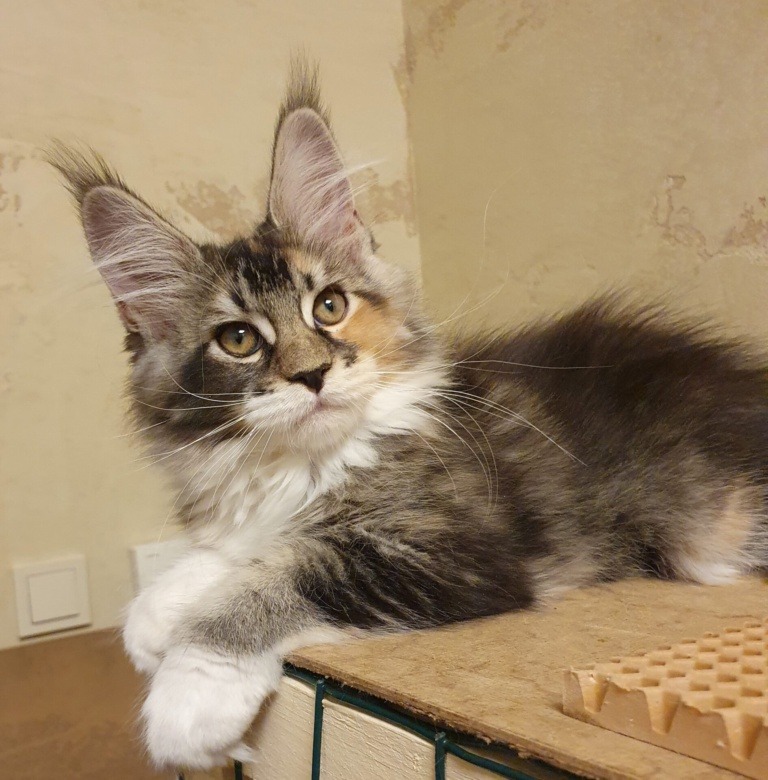
You can't train a cat the way you train a dog. But you can build habits that take years to undo, and in the first few months that happens easily, without anyone noticing. Here are five mistakes almost everyone makes, and each one has a simple alternative.
What it looks like. A two-kilo kitten catches your hand, nibbles it, wraps its front paws round it and rakes it with its back feet. It's sweet and doesn't hurt a bit.
What it teaches. Your hand becomes prey. A year later you have a nine-kilo cat with the same habit, except that now the bite is real and the back legs work properly. Retraining an adult cat is hard: the habit was practised every day during the most impressionable period of its life.
What to do instead. Wand toys, mice on a string, anything that isn't part of your body. Hands are only for stroking and feeding.
If the kitten does latch on, don't snatch your hand away: a sudden jerk triggers the hunting reflex and the grip gets tighter. Freeze, wait for it to let go, and stop the game for a few minutes. For a cat, the game simply ending is the clearest feedback there is.
This is exactly what littermates teach a kitten: bite too hard and nobody wants to play with you. A kitten taken home at two months hasn't finished that course, so the teaching falls to you.
What it looks like. The cat has torn the wallpaper, climbed on the table or gone outside the litter box. The owner shouts, smacks it, sprays it with water or rubs its nose in the mess.
What it teaches. A cat doesn't connect the punishment with what it did. It connects it with the circumstances: the person, the place, the time of day.
The result is predictable: the cat doesn't stop tearing the wallpaper, it starts doing it while you're out. It also stops trusting you, starts avoiding you and in some cases turns aggressive, because you have become a source of trouble.
A word on rubbing its nose in it: a cat makes no connection at all between the puddle and its own nose. The only effect is that it becomes afraid of you and of the litter box at the same time.
What to do instead. Take away the opportunity and offer an alternative. If the cat claws the sofa, it needs a tall, sturdy scratching post, at least a metre high, right next to it: a big cat will ignore a short one. If it climbs on the table, clear away whatever is interesting up there and give it a high place it's allowed to use, a shelf or a cat tree. If it goes outside the litter box, check the size (an adult Coon needs a box at least ninety centimetres long; it physically won't fit in a standard one), and check the cleanliness, the litter and the location too.
Only positive reinforcement works: praise the cat when it gets it right. Coons learn well; it's a clever breed.
What it looks like. The cat wakes you at five in the morning: it walks over your head, knocks things off shelves, yowls. You get up and fill the bowl just to get some peace.
What it teaches. Exactly what happened: it yowled and got food and attention. Cats learn very well from results, and this result was instant.
Then an awkward rule kicks in: if you respond only some of the time rather than every time, the habit sticks even more firmly than if you always responded, and the cat keeps trying harder. An irritated response counts as attention too: from the cat's point of view, you answered.
What to do instead. Ignore it completely, with no exceptions. For the first few days it will get worse than before: that's a normal stage as the habit dies out.
At the same time, deal with the cause. Cats are crepuscular, with a peak of activity in the early morning, and a cat that hasn't been tired out during the day will wake you at its own hours. A vigorous game with a wand toy in the evening, before the last meal, helps: a cat that has played hard and eaten well sleeps. If hunger is the problem, a timed automatic feeder solves it without you, and the cat stops linking food with you.
What it looks like. The cat struggles, the owner holds on tighter and finishes the job: the coat has to be combed, after all.
What it teaches. One experience like that sets the training back by months. The cat remembers the force, not the result, and next time it walks off as soon as it sees the comb.
With a Maine Coon this costs you dearly: it needs combing once a week for the next fifteen years. A cat that hides from the comb turns a twenty-minute routine into a wrestling match, and then into trips to the groomer.
The same goes for mats: if you tug at a tangled knot with a comb, the skin gets pulled along with it, and that hurts. A dense mat is cut out, not combed out.
What to do instead. Short sessions instead of one long one: five minutes every day works better than half an hour of struggle once a week. Stop before the cat gets fed up, not after. Start where it feels nice (the back, behind the ears), and only then move on to the "trousers" and the belly.
Trim the claws one paw per session. Nobody can manage eighteen claws in one go.
Start while the cat is still a kitten, and start with touch rather than tools: handle its paws and belly while you stroke it, so it becomes something ordinary.
What it looks like. The cat hisses at a child or a guest, and the owner tells it off. The cat retreats to the top of the wardrobe, and someone lifts it down to meet the guests.
What it teaches. Hissing is a warning, not aggression. The cat is telling you how much space it needs with its voice instead of its claws.
When you punish hissing, you take away the warning signal. Next time the cat goes straight to its claws, because the step in between has been banned. That's exactly how you get cats that "attack without warning": there was a warning, but the cat was taught not to give it.
The same goes for hiding places. An animal with somewhere to retreat to doesn't let things come to a fight. One that is cornered defends itself.
What to do instead. Give the cat a refuge it's allowed to use: a high shelf, the top of a wardrobe, a tall cat tree, somewhere children and guests physically can't reach. And one rule for the whole family: if the cat has gone up high, nobody goes after it. Treat hissing as information: the cat is uncomfortable right now and whatever is happening needs to stop. It's a useful signal, not bad behaviour.
Each one comes from wanting a quick result: get the cat off the sofa, get the combing over with, get some quiet at five in the morning. Meanwhile the cat learns not what you meant to teach but what actually happened. And all five are easier to prevent than to fix: in the first months habits form almost effortlessly, good and bad alike.
If the behaviour has already changed and you can't work out why, start by messaging the breeder: they know the temperament of the line and the usual scenarios. But sudden aggression or refusing the litter box in an adult cat is most often down to pain, not upbringing, and then the cat needs a vet.
Marking and litter box problems are covered separately in If your cat has marked the sofa. Helping a kitten settle in is covered in The first days at home.
Home in Raksi Maine Coon cattery, St Petersburg. Our kittens are on the Kittens page, and questions are welcome in our VK group (in Russian).
 5 signs of stress in a Maine Coon that owners mistake for bad character16 October 2026
 Training a Maine Coon: how to stop biting, clawing the furniture and night-time wake-ups7 October 2026
 Maine Coon habits: why they talk, love water and follow you around27 September 2026