
Where the trills instead of miaows come from, why a Coon paws at his water, why he waits outside the bathroom door, and what it means when he brings you a toy at three in the morning.
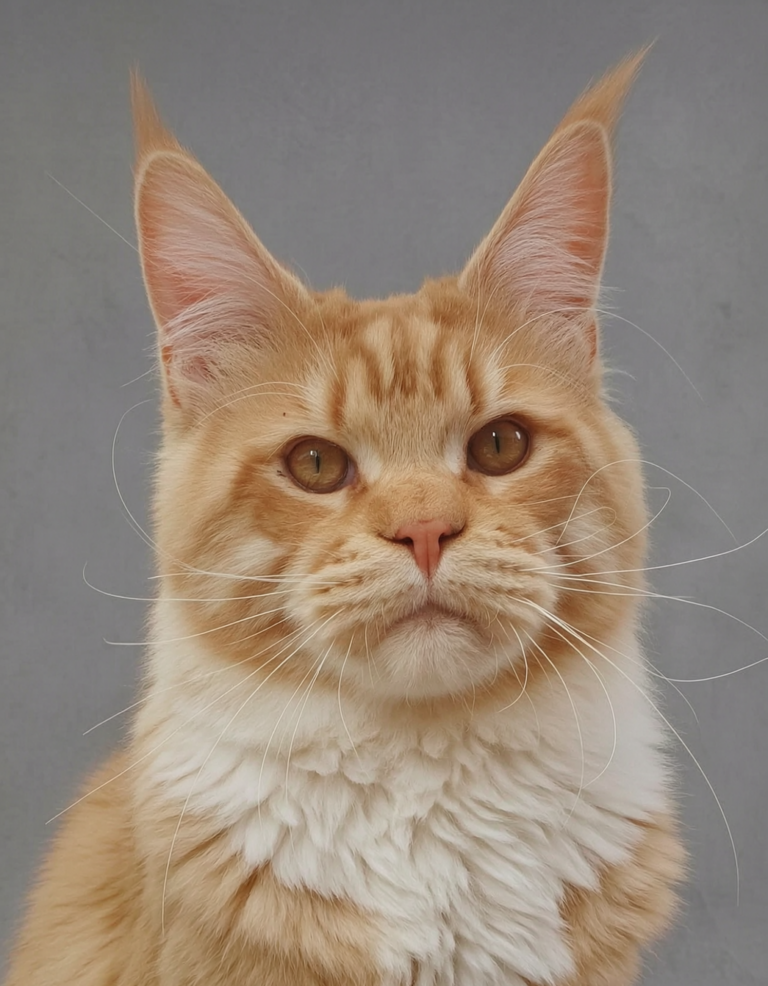
Your first week with a Maine Coon is mostly spent being surprised. The cat makes sounds your last cat never made, paws at the water in his bowl and walks you to the toilet. Almost all of these quirks have an explanation, and it goes back to the history of the breed.
The usual Maine Coon sounds are short trills, chirps and little whistles. You'll rarely hear a proper miaow, mostly when the cat is seriously unhappy about something. At first it's baffling: a nine-kilo animal walks in and makes a high, bird-like noise that clearly doesn't match his size.
A trill is how a mother cat calls her kittens. Most cats switch to miaowing at people as they grow up. Coons keep much of their kitten repertoire into adulthood, and that's part of a wider trait of the breed: they are slow to grow up in general, and not only physically.
They talk when they have something to say. He meets you at the door and comments. You shut a door in his face and he protests. Say his name and he'll answer. Some owners get drawn in and hold proper conversations with their cat, the cat answering in different tones and the human pretending to understand.
Silent Coons do exist, but they're the exception. If you want a quiet cat, bear this in mind when choosing a breed.
Everyone writes about Maine Coons loving water, and they usually get it wrong. A Coon isn't keen to swim. What he likes is to play with water.
It looks like this. The cat goes up to his bowl and starts slapping the water with his paw, splashing it all over the floor. He drinks from his paw. He climbs into the sink while you're brushing your teeth. He sits on the edge of the bath and watches the running water. Some even turn the tap on themselves if it has a lever handle.
The explanation lies in how cats see. Close up, cats find it hard to see a still water surface and to judge where it is. A tap of the paw makes ripples that show where the level is. Plenty of cats do this; in Coons the habit is simply stronger and lasts all their lives.
There's a second, more down-to-earth reason: Coons don't like drinking next to their food. A bowl standing right beside the food makes them suspicious, whereas running water from the tap seems trustworthy.
So put the water away from the food, at least a metre apart, or better still buy a drinking fountain. The more your cat drinks, the less you need to worry about his kidneys and urinary tract. And put something under the bowl, because he won't stop pawing at the water.
A separate word on bathing: loving water doesn't mean the cat will be thrilled about a bath. A Maine Coon's coat is slow to get wet, washing him takes longer than you'd think, and it's done a couple of times a year.
This is the trait that gets the breed called a dog in a cat's body, and it's the reason most people choose it.
A Coon picks his person and stays close. You go into the kitchen and he moves to the next chair. You sit down to work and he lies down half a metre away. You go into the bathroom and he comes to check what's going on, and if you don't let him in, he waits outside the door.
The dog comparison isn't quite right, though. A Coon has none of a dog's obedience: he doesn't follow commands or look for approval. He's simply there, taking part in whatever is going on. You feel the difference within the first week.
This trait has a downside that's better known before you buy. A Maine Coon copes badly with long hours alone. If nobody is home for twelve hours a day, five days a week, the breed isn't for you, and it's better to find that out now than to come home six months later to shredded wallpaper and a cat who greets you by yelling.
Cats are crepuscular: they are most active in the early morning and the evening. With Coons you can add a long childhood on top: a three-year-old cat still tears down the hallway after a sweet wrapper and skids round the corners.
The gift of a toy is a genre all of its own. A Coon brings a toy mouse or a sweet wrapper and puts it down next to you, sometimes with a chirp. It's hunting behaviour: prey is brought back to a safe place, to the family. Some cats play fetch in earnest and bring back a thrown toy again and again.
What to do about the night-time activity: play with your cat in the evening, before his last meal, not in the morning. A cat who has played and eaten his fill sleeps. Giving him attention when he wakes you up early only reinforces the habit, so it's best not to react at all.
Sitting in boxes and sinks. A Coon likes to feel walls around him, even when he's clearly bigger than the box and spills over every side.
Kneading you with his paws and purring. This comes from kittenhood, when a kitten kneads its mother's belly while feeding. Coons keep it longer than many breeds.
A love of heights. The top of the wardrobe, the fridge, the highest shelf of the bookcase. For a big cat it's also a way to be above everyone without joining in.
Carrying things in his mouth. Hair ties, socks and small toys travel around the flat and turn up in bowls and shoes.
Talking to the birds outside the window: a chattering sound with a telltale quiver of the jaw, a sign of hunting excitement.
Where do habits end and reasons to worry begin? If your cat suddenly starts hiding, stops talking, drinks noticeably more than usual or goes outside the litter box, that's no longer character but a change in his health.
In that case, first write to the breeder you got the kitten from. They know the line and how the littermates behave, and a couple of questions are often enough for them to tell what's normal for his age from a real problem. If you're still worried after that conversation, go to the vet, this time with the cat's history rather than a blank page.
People come for the size and the beautiful coat, but six months later, when they talk about their cat, it's something else entirely: how he meets them at the door, how he answers back and how he splashes water all over the kitchen. Looks are what you notice first, but it's the habits you live with.
Owners of our kittens describe what this is like in real life on the Reviews page. Maine Coon kittens are on the Kittens page, and videos and photos of our grown-up cats are in our VK group (in Russian).
Home in Raksi Maine Coon cattery, St Petersburg.
 5 signs of stress in a Maine Coon that owners mistake for bad character16 October 2026
 Training a Maine Coon: how to stop biting, clawing the furniture and night-time wake-ups7 October 2026
 5 Maine Coon training mistakes that are hard to undo later9 September 2026