
Puddles outside the litter box, flanks licked down to the skin, sudden aggression and a cat who spends whole days under the bed. What lies behind it, and why "out of spite" is the wrong explanation.
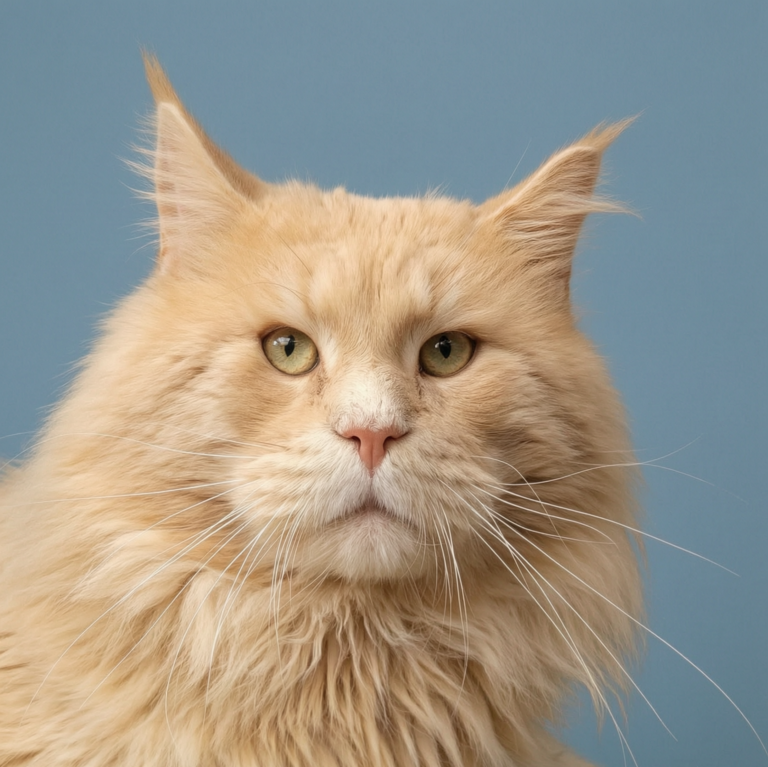
Cats don't take revenge. That's the first thing to accept when you're dealing with a change in behaviour, because the "out of spite" explanation closes the question and gets in the way of finding the real cause.
Five signals are most often mistaken for a cat's character going sour: puddles outside the litter box, licking down to bald patches, sudden aggression, hiding and yowling at night.
Owners decide the cat is offended and getting back at them for going away for the weekend, or is simply being cheeky.
In reality a cat marks its territory with its own scent when it feels unsafe. It isn't a protest but an attempt to get back the feeling of "this is mine".
The causes, from most to least common: a dirty litter box, a box of the wrong size, a change of litter, the box being moved, a new person or animal in the house, building work, a move, the owner being away for a long time.
A puddle and a spray mark are different things. A puddle on a flat surface means the cat has used the spot as a toilet. Marking looks different: the cat stands with his tail upright and quivering, and the stream goes onto a vertical surface. That's territorial behaviour, and in unneutered males it's instinctive.
An adult Maine Coon needs a litter box at least ninety centimetres long: he physically won't fit in a standard one. You need one box per cat plus one, and they should stand well away from food bowls and noise.
Clean the spot with an enzyme cleaner, without bleach or ammonia: to a cat, ammonia smells like urine, and he'll come back to the same place.
Sometimes it isn't about behaviour at all. If the cat strains in the litter box with nothing coming out, passes small amounts often, cries while urinating or there's blood in the urine, it may be a urinary blockage. In males this is an emergency where hours count: take him to the vet immediately.
People take this for fastidiousness or, the other way round, decide something is wrong with the coat and go and buy vitamins.
Licking calms a cat and eases anxiety. Under chronic stress the habit becomes compulsive, and the cat licks one spot until the fur is thin, and then down to the skin.
The belly, inner thighs, base of the tail and front legs suffer most. The skin is usually clean, with no redness or scabs, and the fur looks as if it has been clipped.
Think about what has changed at home over the last few weeks: a new animal, a baby, a move, building work, a change in your schedule, the loss of a favourite resting place.
If the licked area shows redness, scabs or scratches, or the cat flinches when you touch it, the cause is more likely the skin (allergy, parasites), less often pain in that area. Start by messaging the breeder: they know whether this has happened in the line. Then take the cat to the vet.
People blame the cat's character or the breed: he's gone bad, turned nasty, "that's the breed for you".
But a calm cat who suddenly starts hissing, swiping and biting has almost never simply "gone bad". One of three mechanisms is at work.
Pain. This is the most common cause of sudden aggression in an adult animal. A cat can't tell you it hurts, so it defends itself against being touched. Pain is especially likely if the cat has become aggressive when stroked in a particular spot or when you try to pick him up. In large breeds the pain is often in the joints.
Redirected aggression. The cat sees a strange cat through the window and gets worked up, but has no one to take it out on, so whoever happens to be nearby gets it. It looks completely unprovoked because you never saw the trigger.
Overstimulation from play or stroking. Cats have a limit for touch: after a certain amount of stroking, pleasant turns into irritating. The cat gives warning signs (a twitching tail, flattened ears, turning his head towards your hand), but people usually miss them.
If a calm adult cat suddenly turns aggressive, start by ruling out pain: message the breeder first, then take him to the vet.
A cat like this gets labelled unsociable: that's just his nature, he isn't used to people.
Hiding in new surroundings is normal, and a kitten under the bed in the first days after moving shouldn't worry anyone.
It's worrying when it drags on, or starts suddenly in an animal who used to live out in the rooms. Cats retreat to a dark, enclosed place when they feel bad, whether from fear or from pain.
Check that the cat has a proper refuge up high, not just under the bed. A large animal needs vertical space: a shelf, the top of a wardrobe, a tall cat tree where nobody bothers him and he can see the room. Agree with the family that once the cat has gone up there, nobody goes after him.
If the cat is hiding and also not eating, drinking or coming out to the litter box, it's a health matter and needs looking into quickly.
It looks as if the cat is just being cheeky, waking you on purpose and demanding attention.
Maine Coons are chatty, and some of their sounds are simply conversation. But when a cat starts yowling differently from before, that's another matter.
A Maine Coon copes badly with being alone: it's the flip side of his attachment to people. A cat left on his own for twelve hours at a time starts greeting you more loudly, following you more insistently and waking you at night. That isn't cheek. He's short of company.
Or the cat has fitted his routine around yours and simply hasn't tired himself out during the day. Cats are crepuscular, and their activity peaks in the early morning.
Count how much time a day you actually spend with the cat. A game with a wand toy in the evening, before the last meal, makes more difference than you'd think: a cat who has played and eaten his fill goes to sleep.
Don't respond to early-morning wake-up calls at all: any attention reinforces the habit.
Night-time yowling in an older cat, though, especially if it's loud and he seems disoriented, can be a sign of a health problem, and that needs a vet.
Whatever the change in behaviour, rule out health first, because pain passes itself off as character better than anything else. Start by messaging the breeder you got the kitten from: they know the line and the typical scenarios, and a couple of follow-up questions are often enough for them to tell what's normal for the age from a real problem. When you then go to the vet, you'll arrive with the animal's history.
Next, look for what has changed at home in the last few weeks. Cats react to changes that seem trivial to people: furniture moved around, a new smell, a different schedule.
Only after that should you work on the behaviour: add vertical space, put out more litter boxes, change the play routine.
Punishment doesn't work in any of the five cases. A cat doesn't link it to what it did. It links it to you, and the stress only grows.
Spraying is covered in detail in If your cat has marked the sofa, and settling in after the move in The first days at home.
Home in Raksi Maine Coon cattery, St Petersburg. Our kittens are listed on the Kittens page, and you can ask questions in our VK group (in Russian).
 Training a Maine Coon: how to stop biting, clawing the furniture and night-time wake-ups7 October 2026
 Maine Coon habits: why they talk, love water and follow you around27 September 2026
 5 Maine Coon training mistakes that are hard to undo later9 September 2026