
Five questions an honest breeder answers in a minute, while a mere seller starts explaining why they don't matter. Plus what the breeder must show you when you collect the kitten.
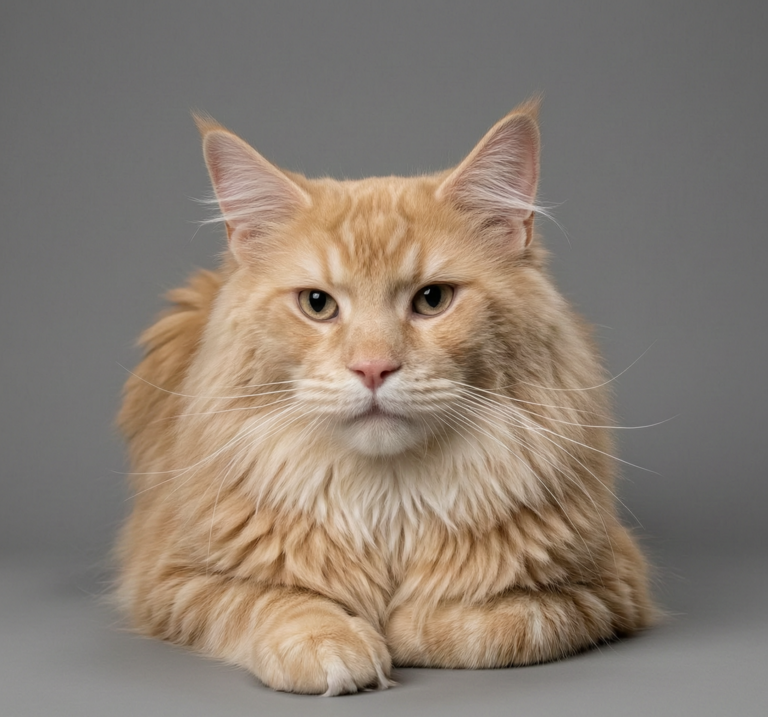
Conversations with breeders usually revolve around the kitten: how much, when can I collect, what colour. Everyone answers those questions equally smoothly.
Here are five different ones. They take a minute, you ask them over the phone before you travel, and they weed out most of the dubious offers.
Good answer. They name the system (WCF, FIFe or TICA), a prefix such as Raksi Line*RU and the registration number. Without hesitation, because to them it's routine information.
Bad answer. "Why do you need to know?" "You don't need papers, they're just an extra cost, and this way the kitten's cheaper." "We're registered, but I can't find the number right now."
Why it works. Nobody protects the word "cattery": anyone can put it in an ad. Only registration turns that word into a fact you can check.
Good answer. They name the club and often suggest you ring it to check.
Bad answer. "We work with a club, but there's nobody there at the moment." "We'll do the paperwork later, after the sale." "We'll post you the pedigree."
Why it works. When a litter is registered, a club specialist examines the kittens and confirms they are purebred and match the stated parents, and then the kitten certificates are issued. A kitten leaves with its certificate in hand. If there's no certificate, the litter hasn't been registered, and as far as the breed is concerned the animal is not a pedigree cat, whatever the ad says.
A five-minute call will check it: give the litter's date of birth, the kitten's sex and colour and the parents' names. Find the club's number with a search engine; don't take it from the seller.
Good answer. They send the lab reports with reference numbers, the cats' names and dates: DNA tests for HCM, PKdef and SMA. With the HCM test comes a recent heart scan (echocardiogram) report. They often add that it's all on their website and you could have looked beforehand.
Bad answer. "All our cats are healthy, we keep an eye on that." "None of them has ever been ill." "Tests are expensive, and the kitten's just a pet, so why would you need them?"
Why it works. Hypertrophic cardiomyopathy shows up from the age of three, and kittens are sold from queens aged two or three. "None of them has been ill" only means nobody has watched the cats for long enough.
Ask about the heart scan separately: the DNA test doesn't cover every case of the disease, as there's a form not linked to the known mutation. That's why the test is done once in a lifetime, and the scan every year.
The result is easy to read: "N/N" means the cat is clear of the mutation, and "N/HCM" means a carrier, which is only mated with a clear partner.
Good answer. Yes, come over, let's just agree a time. They show you the kittens' mother, how the cats are kept, the litter boxes and where the cats sleep.
Bad answer. "Let's meet at the metro, it's easier for you." "The mother's resting, we can't show her." "We're in quarantine, no visitors", even though they're happy to hand over the kitten.
Why it works. You're not going to pick up a parcel. You're going to see the conditions in which an animal that will live with you for fifteen years has grown up.
The mother also shows you what the kitten can't yet: adult size, type, coat quality and temperament. A calm, friendly queen has usually raised calm kittens.
The quarantine excuse is sometimes genuine, for example if a litter has just been born. Then an honest breeder will offer a video call and rearrange the visit, rather than insist on meeting at the metro.
Good answer. Specifics: the tail is a bit short for showing, the ears are set a little wide, there's a white patch the colour standard doesn't allow. And an explanation of why the kitten is pet class.
Bad answer. "None, he's perfect." "All our kittens are show class."
Why it works. There's no such thing as a perfect cat, and that's exactly why pet class exists. Someone who can't name a single fault either doesn't know how to assess cats or doesn't want to talk about it.
The answer also shows whether the seller understands the standard at all. A breeder talks about ear set, tail length and profile. A backyard breeder talks about weight and colour.
No more questions here: these are documents you should be handed.
Kitten certificate. The kitten's name with the cattery prefix, date of birth, sex, colour with its code, the parents' names, the club's stamp and a number. Check the date of birth against the kitten's age, and the colour code against what you can see.
Vet passport. Stickers from the vaccine vials with dates and signatures, not a handwritten line saying "vaccinated". By 12–14 weeks there should be two entries. Plus deworming.
Tattoo or microchip. The number matches the documents. A tattoo can be shown to you in the ear; any clinic can read a microchip.
Contract. The kitten's class, health guarantees and how long they last, what happens if an infection is found in the first days, neutering terms for pet class, and a clause on returning the cat to the cattery.
Food for the first days and something that smells of home (a piece of bedding or a toy). A move and a change of diet at the same time are hard on the body.
All five work over the phone, before you've gone anywhere or paid anything. A breeder answers them calmly, having heard them every season. A seller starts explaining why they don't matter, and that in itself is your answer.
Kitten classes are explained in Kitten classes, and checking a cattery in Choosing a Maine Coon cattery.
Home in Raksi Maine Coon cattery, St Petersburg. Our kittens are listed on the Kittens page, and you can ask questions in our VK group (in Russian).
 Waiting list for a litter: how waiting for a Maine Coon kitten works23 October 2026
 Reserving a Maine Coon kitten: how the deposit works and what to put in writing22 October 2026