
What you can tell from the website, from messages and from a single call to the club. Plus five things that give away mass breeding before you've even got in the car.
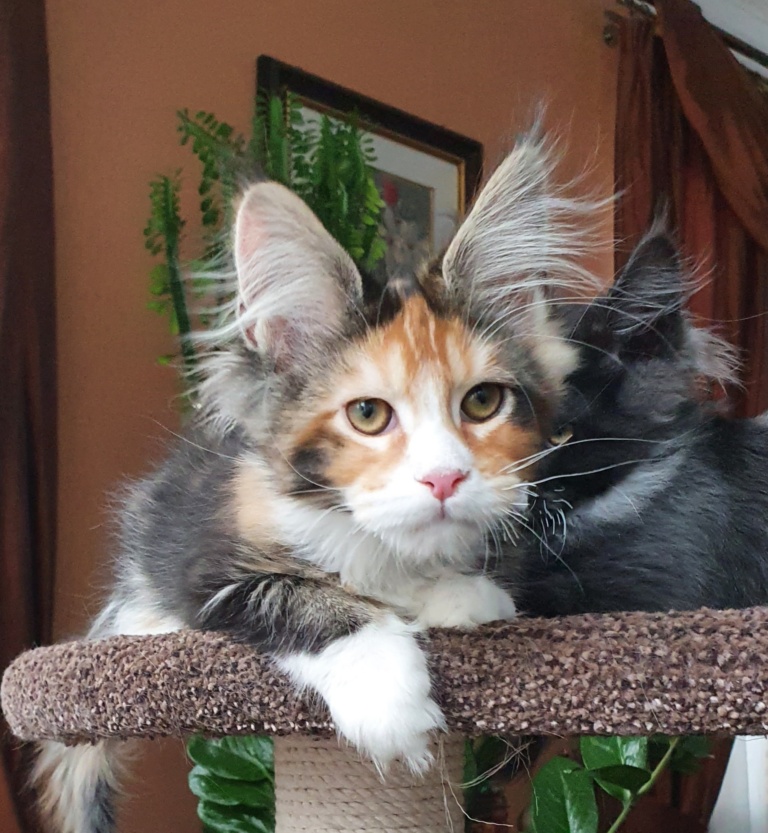
People usually choose a kitten, but it's the person you should be choosing. At three months a kitten is still a work in progress. The breeder has been responsible for it through all the years before, and will be answering your questions for the next fifteen.
A cattery should belong to a feline system: WCF, FIFe or TICA. It has a registered prefix such as Raksi Line*RU and a number.
One question checks this. A good breeder gives the system, prefix and number without hesitation or irritation: to them it's a normal part of the conversation.
What should worry you isn't a missing answer but the kind of answer you get. "Why do you need to know?", "we work without all that, papers are just an extra cost", "we're registered, but I can't find it right now": three versions of the same thing.
Litters are registered with a club: a specialist examines the kittens and confirms they're purebred and match the stated parents, and then the kitten certificates are issued.
A good breeder names the club without being asked and doesn't mind you calling it. In fact, they often suggest it: give them a ring and check.
It takes five minutes. Find the club's number with a search engine, not from the seller, and give the litter's date of birth, the kitten's sex and colour and the parents' names. Check the cattery's address while you're at it: that rules out someone trading under another breeder's registered name.
The simplest sign, and one of the most reliable.
An experienced cattery has a visible history: years of litters with dates, photos of its graduates as adults, show results, and pages for the breeding cats with their pedigrees.
Look at the grown-up graduates in particular. Everyone has pretty kittens, but a photo of a four-year-old cat shows what those kittens grow into, and it also means the breeder has stayed in touch with the owners. A page set up three months ago and made up of kitten photos shows none of this.
Not "we'll show you when we meet": they're on the website, on each cat's page, and you can look at them before your visit without asking anyone's permission.
That means DNA tests for HCM, PKdef and SMA, recent heart scan (echocardiogram) reports and hip dysplasia X-rays. The format: a lab report with a reference number, the cat's name and the date.
A breeder who has paid for health checks wants people to see them. It's the main thing that sets them apart from a seller with an ad, and there's no reason to hide it.
The most telling sign of all, and the only one that works the other way round.
A good breeder asks questions: do you have other pets, are there small children, will the cat be alone all day, are your windows fitted with cat screens, who will do the grooming, have you had cats before.
Sometimes they say no. If someone cares where a kitten goes, they care before the sale, not after. A seller ready to hand an animal to anyone who has transferred the money tells you quite a lot about themselves.
There's no such thing as a perfect kitten. In any litter, one has a slightly short tail, another's ear set isn't ideal, another has a little white spot where its colour says there shouldn't be one.
A good breeder points this out before you spot it and explains why the kitten is pet class. "All ours are show quality" comes from someone who either can't assess cats or doesn't want to.
They also talk about show class as potential, not as a guarantee of titles: it's hard to judge at three months, and contracts usually say so.
You can check this before you buy too: from reviews and from what the breeder says about it.
Normal practice: the breeder answers owners' questions for years, knows how their cats are growing up and gets photos. The contract also says the cat comes back to the cattery if, for whatever reason, it doesn't work out for the owner. No decent breeder will let one of their cats end up on the street or in a "free to a good home" ad.
Ask directly: can I message you in a year's time if something goes wrong? The answer, and the tone of it, tell you a lot.
All of these are visible before you travel, too.
There are always kittens. If kittens from five or six litters are available at once, all year round, that's a production line. A conscientious cattery regularly has no kittens at all.
Willing to let kittens go at two months. Until 12–13 weeks a kitten isn't protected by its second vaccination and hasn't finished learning from its mother and littermates.
Meeting anywhere but at home. "Let's meet at the metro, it's easier for you" means you won't be shown how the cats live.
Lots of breeds at once. A cattery breeding Maine Coons, Bengals and Sphynxes at the same time is running a business, not a breeding programme: each breed needs its own knowledge and its own lines.
A discount for a quick sale. "I'll knock a bit off if you take him today": a good kitten doesn't need to be offloaded.
A call to the club, half an hour on the website, a phone conversation. On the other side of the scales: fifteen years with the cat, and whether there will be anyone to message when, two years on, something changes in its behaviour.
There's a detailed checklist in Choosing a Maine Coon cattery. Our breeding cats and their test results are on the Females and Males pages, and our owners' reviews are on the Reviews page.
Home in Raksi Maine Coon cattery, St Petersburg. Our kittens are on the Kittens page.
 Waiting list for a litter: how waiting for a Maine Coon kitten works23 October 2026
 Reserving a Maine Coon kitten: how the deposit works and what to put in writing22 October 2026