
You can look at documents, but words are hard to check. The kitten itself and its littermates, though, tell you quite a lot about a cattery if you know where to look.
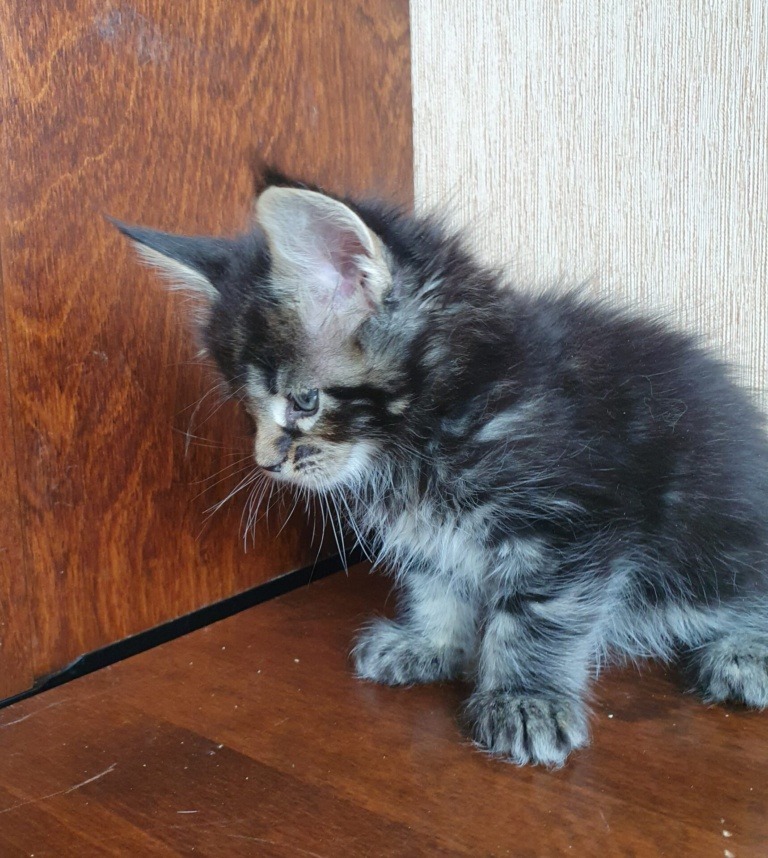
Buyers check a breeder by their documents and by talking to them. That's the right thing to do, but there's one source that can't lie: the litter itself. Here are six things an experienced eye picks up in the first few minutes of a visit.
A small difference in size between littermates is normal: it comes down to their position in the womb and their access to milk.
What isn't normal is a litter of five where one kitten is noticeably smaller than the rest, behind in its development, listless and dull-coated, and the breeder explains it away with "he's just the baby of the litter".
That picture means either the mother had trouble feeding, or the kitten wasn't given enough to eat, or an illness went untreated. None of these speaks well of the cattery.
Compare the kittens with each other for activity, solidity and how they react to movement. Differences in character are normal; differences in condition shouldn't be there.
This is the main sign that separates breeding for type from breeding for numbers.
Maine Coons are heavy, and you can feel it in your hands as early as two or three months. A kitten should be solid, with broad paws, real weight and a strong chest. Fluff hides this difference completely.
A light kitten with a narrow chest and thin legs will grow into a light cat. No amount of feeding will add bone: it's inherited.
Pick the kitten up. There's no need to weigh it: you can feel the difference between a solid kitten and a flimsy one straight away. Put your hand round its ribcage: it should be broad, not flattened at the sides.
Breed type is visible as early as two months, although it takes years to develop fully.
A Coon has a longish head and a square muzzle, and in profile the chin and nose form a vertical line. The ears are large, wide at the base, and set high and well apart.
A round head, a short muzzle and small ears on the sides of the skull point either to mixed blood or to breeding with no attention to type. The head lengthens with age, but the size of the ears in proportion to the skull stays the same.
Look at the profile while the kitten is calm, and at the ears against the width of the head. Compare the kitten with its mother: she's an adult, and she shows you where its development is heading.
The tail is checked by hand, but hardly anyone does it.
A Maine Coon's tail is long: on an adult it reaches at least to the shoulder blades. A short tail on a kitten points to breeding that isn't true to type.
A kink or bend in the vertebrae is a disqualifying fault. You can't see it through the fur at all, but it's easy to feel: run your fingers along the whole tail from base to tip, and every vertebra should follow on in a straight line.
A breeder who sells a kitten with a kink without warning you knows all about the kink, because they check their litters.
These are the things that get explained away with "it'll pass".
A bloated, hard belly with a thin back means worms. The kitten either wasn't dewormed or was dewormed only on paper.
Dark deposits in the ears and a kitten that keeps shaking its head point to ear mites. They're easy to treat, and they always get treated when someone is looking after the litter.
Discharge from the eyes and nose and sneezing mean an infection is going round the litter. It's common where animals are kept crowded together.
A dull coat with dandruff, bald patches and scratch marks should also ring alarm bells. A bare strip on the bridge of the nose is normal, but there shouldn't be bald spots on the sides.
Look in the litter box too, for any loose stools: the litter box will tell you more than the seller will.
Each of these can be treated. The problem isn't the illness but the fact that the kitten was put up for sale in that state.
This is the most telling sign of all, because it can't be faked.
Kittens raised in a room with people react to someone coming in with curiosity: they come over, sniff you, climb into your hands and play in front of you. A noise startles them for a second, and then they come back.
Kittens kept in a cage or a separate room behave differently: they scatter and won't come out, freeze, hiss at an outstretched hand and ignore toys.
Maine Coons have a steady temperament, and a fearful litter is not typical of the breed. Behind it is either a lack of socialisation or an inherited nervousness that wasn't bred out. The second can't be fixed. The first can, with months of work, and you'll be the one doing it.
The mother tells you more about a cattery than the litter does.
A worn-out queen with a thin, patchy coat means she has been mated with no breaks. The accepted norm is no more than two or three litters in two years, with rest in between.
A calm queen who comes up to visitors and lets you handle her kittens shows you the result of a normal life. A cowed or aggressive one shows you a result too.
Looking at a kitten won't tell you whether it carries cardiomyopathy or other genetic problems, what state its heart is in, how inbred its pedigree is or how big it will be as an adult. Only the documents and the parents' tests show that, which is why looking at the kitten and checking the paperwork only work together.
What to ask about the parents' health and which tests to insist on is covered in a separate article. For kitten classes, see Kitten classes.
Home in Raksi Maine Coon cattery, St Petersburg. Our kittens are listed on the Kittens page; ask your questions in our VK group (in Russian).
 Waiting list for a litter: how waiting for a Maine Coon kitten works23 October 2026
 Reserving a Maine Coon kitten: how the deposit works and what to put in writing22 October 2026