
What breeding Maine Coons are tested for, what the results look like, what carrier status means and why one DNA test isn't enough.
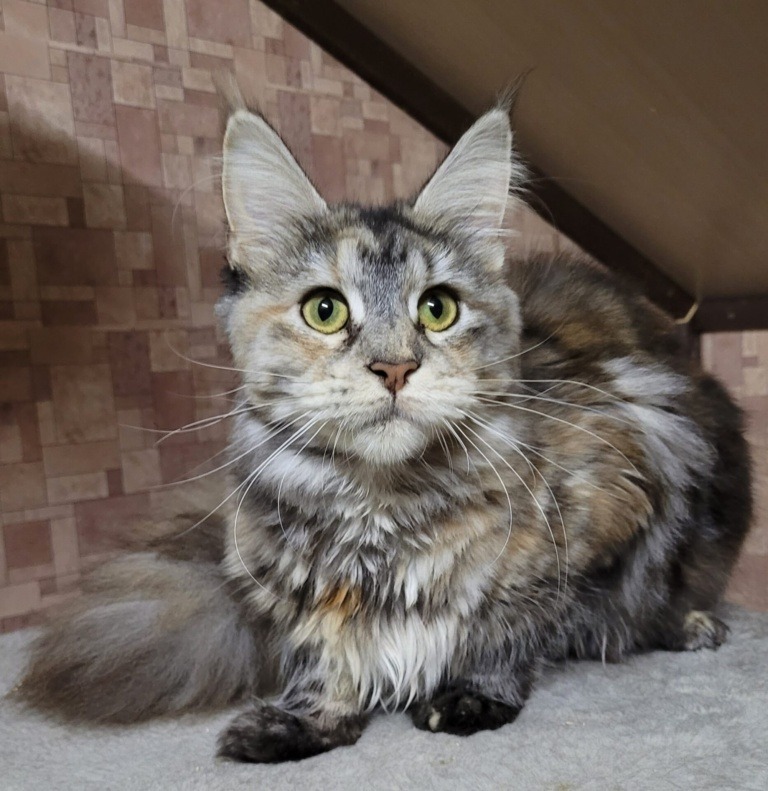
A kitten's condition when you see it tells you how well it has been looked after. Only the parents can tell you what it might suffer from in five years' time.
Start here. Hypertrophic cardiomyopathy is still the breed's most significant inherited problem. In Maine Coons there is a known mutation of the MyBPC3 gene, and the test for it is done once in a lifetime, from a blood sample or a cheek swab.
There are three possible results: N/N (no mutation), N/HCM (carrier, one copy) and HCM/HCM (two copies, the most serious case).
A carrier can be used for breeding on one condition: the partner must be N/N. Pairing two carriers is ruled out, because some of the offspring would get both copies.
You need a lab document showing the cat's name, microchip number and result. "Ours are all clear" with nothing on paper doesn't count as an answer.
Buyers usually don't know about this one, yet it matters more than the previous point. The DNA test doesn't cover every case: there is a form of cardiomyopathy that isn't linked to the known mutation. A cat that tested N/N can still develop it, and the only way to see it is an echocardiogram.
That's why breeding cats have a heart scan every year, starting at around 12–18 months. It's done by a veterinary cardiology specialist: a routine abdominal ultrasound doesn't examine the heart this way.
Ask for the scan reports on both parents, dated within the last year. A breeder who knows about this difference and does the scans usually brings them up without being asked.
PKdef (pyruvate kinase deficiency) causes anaemia. SMA (spinal muscular atrophy) shows up as weakness in the hind legs in young cats.
Both conditions are inherited recessively: a kitten is only born affected if it has two copies, which means both parents are carriers. A carrier paired with a clear partner is safe.
These tests are done from the same sample and in the same panel as HCM, so if a breeder shows you only one result, ask about the others.
This one is mentioned less often, though it matters for a large breed. Maine Coons do get hip dysplasia, and it shows late and subtly: the cat doesn't limp, it just moves less and stops jumping. It's checked with X-rays under sedation, graded on a recognised scale.
Not every cattery does it, and that isn't automatically a red flag. But a breeder who does usually knows more about the breed than most.
This is the most revealing question and the most awkward one. Ask straight out whether there have been cases of cardiomyopathy in the line, how the cats of earlier generations lived and what they died of, and whether any of the cattery's kittens have chronic problems.
What matters is not so much what the answer says as whether there is an answer at all. A breeder who keeps in touch with the cats they've sold knows these things. One who sells and forgets will say "ours are all fine".
There's no such thing as a perfect line. An honest account of what happened and how it was dealt with is more reliable than a picture without a single flaw.
A kitten's health doesn't depend on genetics alone. Normal practice is a first mating no earlier than 12–18 months, no more than two or three litters in two years, a proper rest between them, and retirement from breeding at around five or six.
A queen who is mated every time she comes into heat gets worn out, and it shows in her litters: the kittens are smaller, weaker and less well fed.
The breeder will tell you which litter this is for her and when the last one was, and you'll see it in the queen herself when you visit.
By the time it moves, the kitten should have had two vaccinations three to four weeks apart, treatment for worms and external parasites, a microchip or tattoo, a vet passport with the vaccine stickers and dates, and a birth certificate.
Ask what the kitten has been eating and what litter it has used: it's best not to change either for the first few weeks at home. And check whether a vet has examined the kittens and what they wrote.
Ask before you visit, in writing. It saves a wasted trip and shows you the breeder's attitude straight away: a decent breeder answers in detail and often sends photos of the documents without being asked. If they dodge the question or say "but you're only getting a pet", that's an answer too.
Don't worry about seeming fussy. A breeder who invests in tests and heart scans is glad to get questions like these: they show you understand what you're paying for.
The parents' tests don't replace keeping an eye on your own cat. For this breed a yearly heart scan from about the age of three is a must, whatever the parents' results. Every year the cat also needs a check-up, vaccination and parasite treatment, and after seven, blood and urine tests and a blood pressure check are added.
If something worries you, start by messaging the breeder: they know the line and what the relatives have suffered from. You'll then go to the vet with that information. In an emergency it's the other way round: the vet comes first, and you message the breeder on the way.
We cover cardiomyopathy and the breed's diseases in detail in separate blog articles. A kitten's documents are explained in the article on buying a kitten with papers.
Home in Raksi Maine Coon cattery, St Petersburg. Our kittens are listed on the Kittens page, and you can ask questions in our VK group (in Russian).
 Waiting list for a litter: how waiting for a Maine Coon kitten works23 October 2026
 Reserving a Maine Coon kitten: how the deposit works and what to put in writing22 October 2026