
What a seller cuts corners on when the price is half the going rate, and four honest ways to get a pedigree cat for less, including some most buyers don't know about.
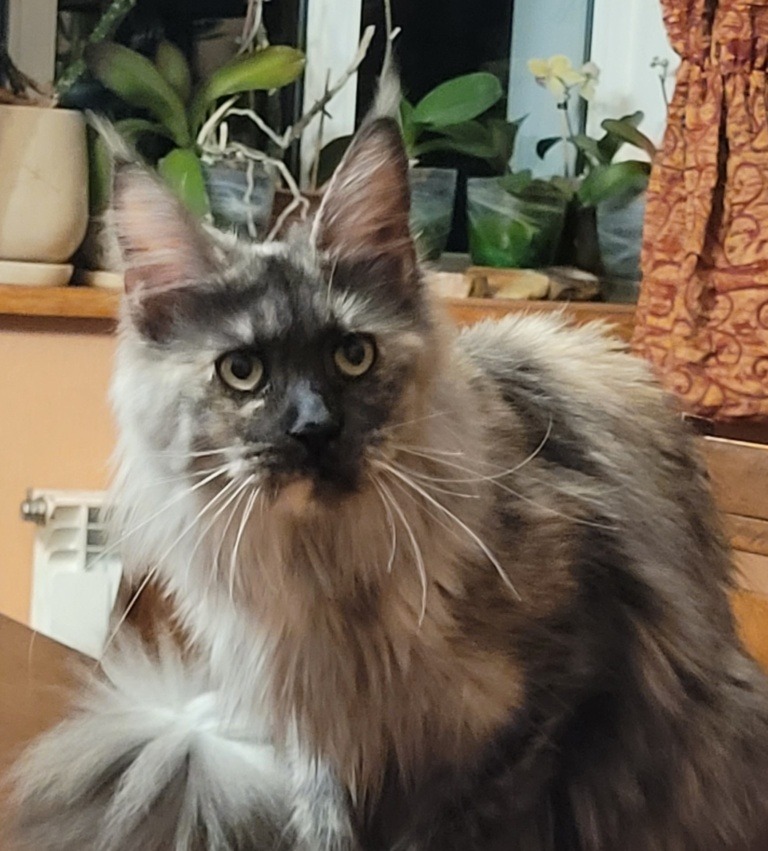
Tens of thousands of people search for "cheap Maine Coon", and it's a perfectly normal thing to want. A cat from a cattery costs as much as a second-hand smartphone, and it's natural to look for something easier on the budget.
The bad news: most cheap offers are cheap for a reason. The good news: there are several honest ways to pay less, and they're rarely written about.
The price of a cattery kitten is made up of very real things. Take any of them away and you get a discount you'll pay for later.
Documents. The litter hasn't been registered and there's no kitten certificate. The breed exists only in the seller's words, and there's no way to check where the cat comes from. This is the biggest and most common "saving".
The parents' tests. Genetic tests for HCM, PKdef and SMA plus a yearly heart scan cost money and have to be kept up. A seller who skips them saves the money, and you take the risk: cardiomyopathy shows up from the age of three, when the cat is already one of the family.
Age. The kitten goes at two months, to save feeding it for another six weeks and to make room for the next litter. It hasn't had its full course of vaccinations or learnt the skills its mother and littermates teach.
The parents. A mating with a proven male from a good line is expensive; a mating with "the neighbour's cat" costs nothing. You'll see the difference when your cat grows up.
Living conditions. Cats in cages, mated every time they come into heat, a stream of litters all year round. Kittens like that cost little to produce, and their health and temperament are what you'd expect.
A word on the maths. The price difference between a cheap kitten and a cattery kitten is wiped out by a single course of treatment. Panleukopenia in an unvaccinated kitten, dental work for a bad bite, heart problems: any one of those bills eats up the whole saving and then some.
All the options below are for cats with papers from proper catteries.
The most obvious option, and the most underrated. A pet-class kitten has some small departure from the standard: a slightly shorter tail, an ear set that isn't ideal, a little white spot where its colour says there shouldn't be one.
It has no effect at all on health, temperament or looks. The difference is visible to a judge in the show ring, not to you on the sofa. A kitten like this costs noticeably less than breed or show class and is sold on condition that it's neutered, which a pet cat needs anyway. If you want a cat rather than a show career, pet class is ideal.
Sometimes a cattery still has kittens of five to eight months: a buyer cancelled a reservation, one was being kept for the cattery until the breeder changed their mind, one didn't live up to show expectations and moved to pet class. These cats are often sold for less, because keeping an older kitten costs the breeder more every month.
For the buyer there are plenty of advantages: you can see how the cat has turned out, the personality has settled, all the vaccinations are done, the cat uses the litter box and scratching post, and is sometimes already neutered. There's just one drawback: you've missed the kitten stage.
Few people know about this. Catteries retire breeding cats at three to five years old and look for pet homes for them, neutered and usually for a token sum or free.
These are healthy, fully grown cats with papers and a known history, used to people and to other cats. They take longer to settle in than a kitten, but you get a beautiful adult Coon in its prime. Ask catteries directly: cats like this rarely make it into ads.
An option for people who don't mind the cattery being involved in the cat's life. The female lives with you but stays in the breeding programme: the cattery takes her for matings and keeps some of the kittens.
The price is much lower, sometimes just a token amount. The terms are set out in a contract, and you need to read it carefully: it's a long-term commitment on both sides. It isn't for everyone, but if breeding interests you, co-ownership is an affordable way into the breed.
Why is it cheaper? A decent breeder gives a specific answer: pet class because of a short tail, an older kitten, a cancelled reservation. A vague "we just want him to go to a good home" should make you wary.
Can I see the kitten certificate and the parents' tests? Documents with numbers, not a story.
Can I come and see how the cats live? A refusal, or an offer to meet at the metro, settles the matter.
The first is cheap because the documents, the tests and six weeks of its life have been taken out of the price. The second costs less because its tail is a little shorter or it's already six months old. The difference is in what exactly you're not paying for.
Our current Maine Coon kittens and prices are on the Kittens page, and cats looking for a home are in the Companions section (in Russian). How our prices are worked out is explained in Kitten prices.
Home in Raksi Maine Coon cattery, St Petersburg. Ask us in our VK group (in Russian); that's also where we post about older kittens and adult cats.
 Waiting list for a litter: how waiting for a Maine Coon kitten works23 October 2026
 Reserving a Maine Coon kitten: how the deposit works and what to put in writing22 October 2026