
The four hereditary conditions breeders screen for, the problems a big cat can develop during its life, and a list of symptoms that can't wait until Monday.
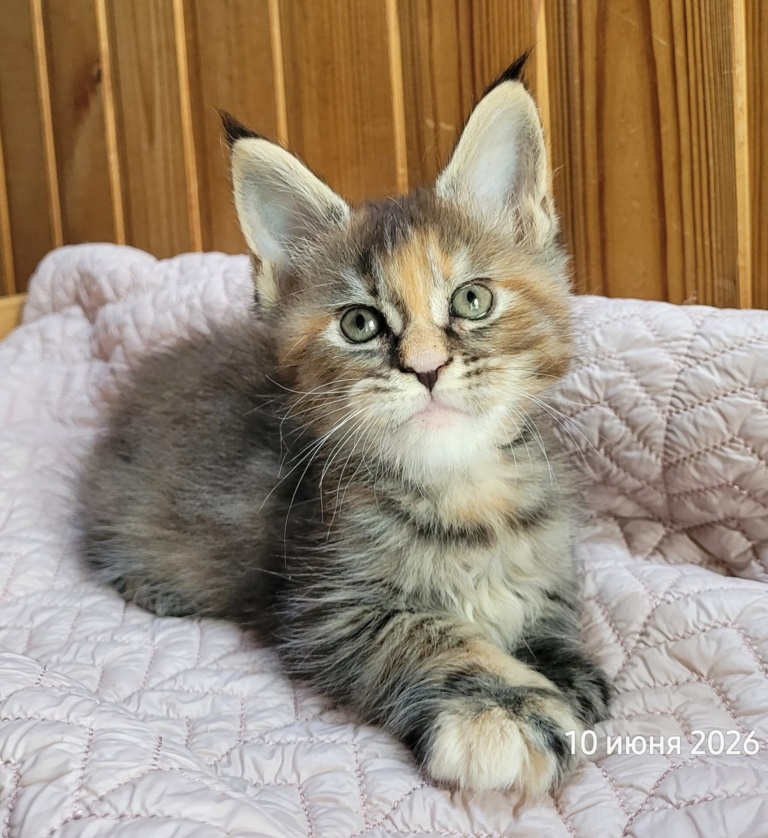
The Maine Coon is a robust breed. But any breed that has been bred for several decades has its own list of hereditary problems, and for the Maine Coon every item on that list is known by name.
The good news is that almost everything on the list can be tested for before you buy. The bad news is that not everyone tests.
The breed's best-known diagnosis, HCM for short. The wall of the left ventricle thickens, the chamber gets smaller, and the heart can no longer fill with blood properly.
The insidious part is that the disease can run without symptoms for a long time. Sometimes the very first sign is a serious complication: a thromboembolism or fluid on the lungs.
Breeding cats get a DNA test for the MyBPC3 mutation and, separately, a heart scan every year. The scan is essential because the test doesn't cover every case: there is a form not linked to the known mutation.
An adult cat has a heart scan once a year from about three years old. It's the one check-up every owner of the breed should put in the calendar.
PKdef is a shortage of an enzyme that keeps red blood cells alive. The red cells break down too early, and anaemia develops.
It shows as lethargy, pale gums and poor tolerance of exertion. It can come and go, with bad spells alternating with fairly good ones. A simple DNA test detects it, and it's one of the diseases that careful breeding eliminates completely.
In SMA the motor neurons of the spinal cord die, so the muscles of the hind legs weaken and waste away. It shows at three to four months: the kitten starts placing his hind legs oddly, sways and doesn't jump as well.
The disease isn't fatal or painful, and the animal adapts, but its quality of life is reduced. There's a DNA test for it.
An underdeveloped joint in which the head of the thigh bone sits loosely in the hip socket. It's harder on a large, heavy animal than on a small one.
The signs are stiffness after sleep, reluctance to jump and a changed gait. It's checked by X-ray; there's no DNA test.
"N/N" means the animal is clear of the mutation. "N/HCM" or "N/SMA" means a carrier: the cat itself may live a healthy life, but it passes the mutation on to half its offspring, so such an animal is only mated with a clear partner.
Ask for numbered lab certificates, not a story. A breeder who tests shows them without being asked. All our breeding cats are tested, the results are on each cat's page, and you can look at them before you visit.
This part of the list depends on the owner, not on genetics.
Obesity. The most common man-made problem. A cat weighing twelve kilos instead of nine puts strain on his joints, heart and liver, and next come diabetes and fatty liver disease. Weight goes on especially fast after neutering, when the metabolism has slowed but the portion has stayed the same.
Urinary stones. A weak spot in neutered males. The main prevention is dull: the cat has to drink a lot. Keep the water bowl at least a metre from the food, or better still use a drinking fountain, and change the water twice a day.
Tartar and gum disease. They progress slowly, with hardly any symptoms, and end with teeth being extracted under anaesthetic. The first sign is bad breath.
Hairballs. A long-haired cat swallows a lot of fur while grooming. Regular combing deals with this more reliably than any paste.
Injuries from falls. A mosquito screen won't hold a cat: it falls out with him. You need cat-proof screens on a metal frame, and for a nine-kilo animal that isn't being overcautious.
Cats hide pain until the very last moment: it's an evolutionary mechanism, not a personality trait. So you have to go by indirect signs.
The usual order is: first contact the breeder you got the kitten from. They know the line and what the cat's relatives have had, and a couple of follow-up questions are often enough for them to tell what's normal for the age from a real problem. But if the list above says "emergency", take the cat to the vet first and call on the way.
Once a year: a vet check-up, vaccination and parasite treatment. From three years old, add a yearly heart scan. After seven, blood tests (biochemistry and a full blood count) are needed to catch age-related kidney changes before symptoms appear.
And the everyday part that works best of all: keep his weight normal. You should be able to feel the ribs under the coat without pressing, and from above there should be a visible waist behind the ribs.
The breed's hereditary diagnoses sound frightening only until you find out that three of the four can be identified by a DNA test in a few days. The difference between a cattery and a private ad is the difference between "tested" and "fingers crossed". Ask the breeder for numbered test certificates.
Our breeding cats' test results are open to everyone on the Females and Males pages. The vaccination schedule is covered in Cat vaccination, and routine vet care in Veterinary care.
Home in Raksi Maine Coon cattery, St Petersburg. Our kittens are on the Kittens page, and you can ask health questions in our VK group (in Russian).
 5 Maine Coon myths that make owners ruin their cats' health24 October 2026
 Allergic to Maine Coons? Whether hypoallergenic cats exist and how to test your reaction14 October 2026